
What Do HOA Fees Actually Cost in Nashville and Franklin? The Real Numbers and What to Check Before You Offer
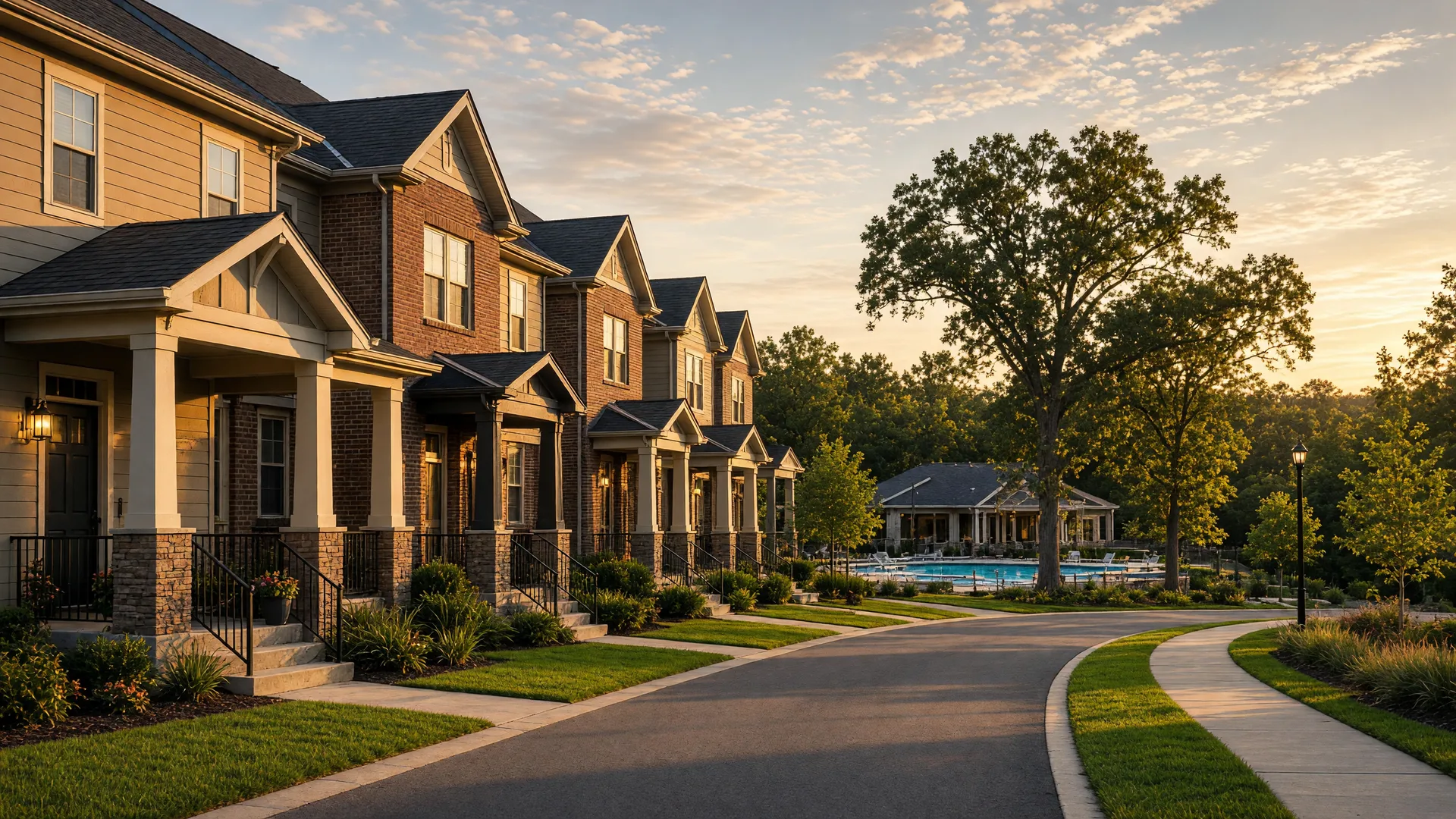
The most-asked question I hear from buyers touring Franklin and Nashville right now is simple: what do HOA fees actually cost, and what do they cover? The honest answer is that the monthly number matters a lot less than the fine print. In Middle Tennessee, single-family subdivision dues typically run from about $25 to $300 a month depending on the amenities, townhome fees land around $150 to $300, and condos run from roughly $250 up past $700 in the city. But the fee is only half the story. The rental rules, the reserve fund, the pending special assessments, and the way the board spends money are the parts that shape your resale value and your monthly budget for years. Here is the honest guide.
Why this question is everywhere right now
The HOA question keeps surfacing in the Middle Tennessee forums, and it is not hard to see why. On r/nashville, the recurring thread is buyers and condo owners comparing notes on what a normal fee looks like, with commenters weighing whether $200 a month is standard and whether a 1961 building's $325 fee is reasonable. In the Franklin groups, the questions skew toward master-planned communities: a thread about one neighborhood's post-2009 rental-ban amendment, and another asking about a community's reputation before moving in. It shows up constantly in the relocating-buyer groups too, almost always phrased as "we never had an HOA where we moved from, what is this going to cost us?"
The timing makes it louder. Mortgage rates sit in the mid-to-high sixes, so every monthly line item is under the microscope, and HOA dues are the one cost that only goes up, never away, and has no mortgage payment attached to it. Add the fact that so much of what sells in Franklin and Brentwood sits inside a homeowners association, and you have a genuinely common question with an answer that most listing sites will not give you.
The honest numbers for Nashville and Franklin
Start with the ranges, because they vary by property type more than by zip code. In Nashville, single-family homes in planned subdivisions generally run about $25 to $150 a month, mostly covering entrance signage, common landscaping, and shared green space. Townhomes typically land around $150 to $300 a month, because the fee usually includes exterior maintenance like the roof, siding, and lawn care up to your door. Condos are the wide range: entry-level and older buildings run roughly $250 to $450 a month, mid-market buildings from about $400 to $700, and downtown high-rises are often well above that. The most commonly quoted average for a Nashville condo HOA is around $410 a month, with reported fees spanning from about $55 up to $2,500 depending on the building and its amenities.
Franklin's numbers follow the same shape. Single-family subdivision fees average roughly $150 to $300 a month, with lower-fee neighborhoods around $70 to $120 and amenity-heavy developments above $300. A well-known master-planned community like Westhaven runs about $180 to $220 a month for its town center, pools, fitness centers, and programming. Franklin condos and townhomes span from about $68 to over $1,000 a month, with a median near $293, depending on what is covered. The takeaway is not the exact figure, it is the spread: the same kind of home can carry dues that differ by hundreds of dollars a month, and the difference is usually amenities, master insurance, and the building's age.
What the fee actually covers
In a single-family subdivision, dues typically pay for the things you share: entrance signage, common-area landscaping, street lighting, green space, and often pools, playgrounds, clubhouses, trails, or gated security. Some communities include trash or sewer service in the fee, which makes a low number more valuable than it looks. In a condo or townhome community, the fee buys everything above plus the big-ticket items you never think about until they fail: the roof, exterior walls, siding, and lawn care up to your door, and in most buildings a master insurance policy that covers the structure. That last piece is why condo fees are higher and why they matter: you are pre-paying for the building's future repairs, not just the pool.
Here is the part that surprises most buyers. The most important thing in an HOA budget is not what the fee covers today, it is whether the association is saving for the future. Condo associations in Tennessee are required to budget for reserves and to update a reserve study at least every five years, which is a formal look at when the roof, elevators, and other big systems will need replacing and whether the money is there. Single-family HOAs have no such requirement, so a subdivision with a tired pool and no reserve line item is quietly handing that bill to you. When you compare two communities with similar fees, the one with a funded reserve is usually the better value, even when its dues are slightly higher.
The questions that matter more than the fee
Tennessee does not have one big law that governs every homeowners association. For single-family and townhome communities, the recorded covenants, conditions, and restrictions, the CC&Rs, are the binding contract you agree to when you buy, and condos run under the state's condominium act. That means the rules differ from one neighborhood to the next, and the only way to know yours is to read the governing documents for that specific address. Here is what to look for, in order of how often it comes back to bite.
Rental restrictions. There is no statewide cap on renting in Tennessee, so each declaration sets its own rules. Some communities cap the number of rental homes, some require a minimum lease term, some have waiting lists, and an increasing number of Franklin neighborhoods have amended their covenants to restrict or ban short-term rentals entirely. Tennessee's courts have held that a generic "residential purposes only" clause does not clearly prohibit short-term rentals, so if that matters to you, get the rental rule in writing before you offer, not from the neighbor's opinion. One safeguard worth knowing: if a declaration is later amended to ban long-term renting of a single-family home, an owner who was renting at the time of the amendment keeps a vested right to continue, under Tennessee law.
Special assessments. A special assessment is a one-time charge for something the regular budget cannot cover, and it can land on you in the same month as your closing costs if the roof is older than the reserve fund. For most HOAs there is no state cap on these, your protection comes from the declaration. Since July 2024, Tennessee has required a vote of at least two-thirds of all owners before a special assessment can fund a "nonessential amenity" like a pool, clubhouse, or golf course, but essential items like roads and drainage are not protected the same way. Ask, in writing, whether any special assessment has been levied, proposed, or discussed in the past three years.
The reserve fund. I touched on this above, and it deserves its own line. Ask for the association's most recent reserve study and budget, and look at what percentage of the fee is being set aside for replacement reserves. A community with healthy reserves can absorb a new roof or a repaved parking lot without a special assessment. A community with none cannot, and the difference shows up in your mailbox as a bill.
The resale package. For condos, the association must give you the governing documents, budget, assessments, and pending litigation on request within ten business days. For single-family HOAs there is no automatic disclosure requirement, Tennessee's residential disclosure law covers the physical condition of the home, not the association, so you have to ask. Request the resale or disclosure package anyway, and read it for pending lawsuits, unpaid fines, violations on the property, transfer fees, and the board's meeting minutes. It is the closest thing you will get to the community's health record, and it is free to ask for.
Your five-step checklist before you offer
Here is the order of operations I give every buyer in an HOA community, whether it is a $280-a-month Franklin subdivision or a $600-a-month downtown tower:
- Ask for the governing documents up front. The CC&Rs, the bylaws, and the rules and regulations. Read the sections on rentals, pets, parking, leasing, and exterior changes, the things most likely to affect you or your future buyer.
- Review the budget and the reserve study. Look at how much of the fee goes to operations versus reserves, and whether the last reserve study is current. In a condo building, the reserve study is required; in a subdivision, it is a sign of a well-run board if one exists.
- Ask about special assessments and pending litigation, in writing. The seller and the listing agent should be able to tell you, and the resale package will confirm it. Also ask about transfer fees and any capital contribution due at closing.
- Get the rental rule in writing. If you might rent the home later, or if short-term rental income matters to you, know the current rule, the cap, and whether there is a waiting list. Do not take the neighbor's word for it.
- Build the fee into your monthly math. Run the all-in payment including dues, taxes, and insurance before you tour. Two homes can have the same purchase price and differ by $300 a month in carrying costs, and that difference is exactly what your budget and your future buyers will notice. Our how much home can I afford breakdown and the buying guide walk through the full picture.
The bottom line
So, what do HOA fees actually cost in Nashville and Franklin? Anywhere from about $25 a month for a no-frills subdivision to several hundred for a townhome and well past $700 for a downtown condo. But the number you should care about is not the fee, it is what the association does with it: whether the reserves are funded, whether a special assessment is lurking, whether the rental rules match your plans, and whether the board runs the place like it will still be standing in twenty years. A well-run community with a modest fee and a healthy reserve is a genuinely great place to own, and it holds its value precisely because of that discipline. Bring the documents to your offer, read them with someone who has read a thousand of them, and you will know exactly what you are buying, including the parts the listing photos do not show. If you are looking at a community and want the honest read on its fees, its reserves, and its rules, reach out with any questions...we're here for you!
Sources
- r/nashville – "HOA fees in Nashville" (whether $200/mo is normal, 1961 building at $325/mo, what to pull from the association)
- r/FranklinTN – "Trent Park HOA FF" (post-2009 rental-ban amendment discussion)
- r/FranklinTN – "Anybody here live in Founders Point?" (community reputation before buying)
- Oak Street Real Estate Group – HOA Fees Nashville TN: 2026 Guide (fee ranges by property type, what dues cover)
- Everhaven Nashville – HOA Fees in Middle Tennessee: Costs, Coverage & Rules
- HOACosts – HOA fees in Nashville, TN (median ~$250/mo, range $55 to $2,500)
- Bethany Hartzog – Franklin TN Townhomes & Condos: Real Prices & HOA Guide (median ~$293, range $68 to $1,026)
- Index Yard – Franklin, TN Living Guide 2026 (single-family and Westhaven HOA ranges)
- Homeowners Protection Bureau – Tennessee HOA Laws (Title 66, Ch. 27): rental rules, special assessments, reserves, resale disclosures
- Nault Law – HOA and Condo Association Disputes in Tennessee (CC&Rs as binding contract, Tennessee Condominium Act)
- Justia – Tenn. Code § 66-27-703 (vested right to continue leasing a single-family home after an amendment)
- HOA Weekly – Tennessee HOA Reserve Study Requirements (5-year study for condos, no requirement for single-family HOAs)
- FirstService Residential – What is a Tennessee resale certificate? (condo resale info within 10 business days, no single-family statutory requirement)

REAL Broker
TN Lic: 372786